Excellent 4.8 out of 5 from thousands of customers


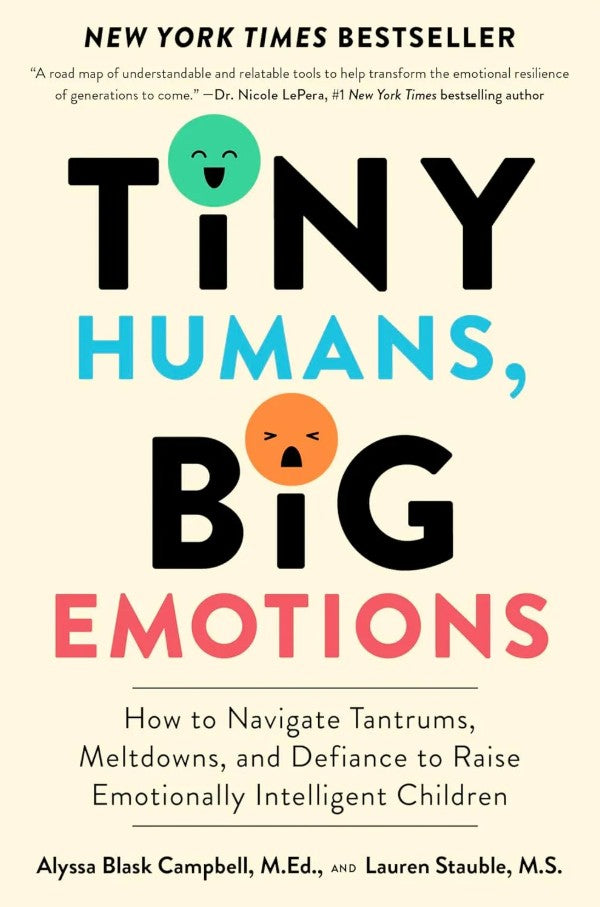
Tiny Humans, Big Emotions

Navigate Tantrums, Meltdowns and Defiance With More Calm and Confidence

A practical parenting guide for understanding children’s emotional outbursts, responding without shame or fear and building lifelong emotional intelligence through everyday moments.

🧠
Practical Parenting Tools
👶
For Children Ages 1–8
❤️
Turn Tantrums Into Connection

  • Helps caregivers understand what is beneath the behaviour
  • Introduces practical co-regulation strategies
  • Supports calm, connected boundary-setting
  • Covers tantrums, defiance, anxiety and emotional overwhelm
  • Written for caregivers of children from infancy through age eight
In Stock, Order Today To Receive It By

Current parenting offer available while this stock allocation lasts.


Order today so the guide is nearby before the next difficult parenting season.


PREMIUM QUALITY
FAST SHIPPING
SATISFACTION GUARANTEED
PREMIUM QUALITY
FAST SHIPPING
SATISFACTION GUARANTEED
PREMIUM QUALITY
FAST SHIPPING
SATISFACTION GUARANTEED
PREMIUM QUALITY
FAST SHIPPING
SATISFACTION GUARANTEED
Tiny Humans, Big Emotions
17 people viewed this in the last hour

Tiny Humans, Big Emotions

Get It By
Get It By

You Love Your Child. You Just Don’t Always Love Who You Become During the Hardest Moments.

The Morning Meltdown

The Morning Meltdown

You are already late, but your child refuses to get dressed, put on shoes or leave the house.

The Public Tantrum

The Public Tantrum

Your child is screaming while strangers stare and every reaction suddenly feels wrong.

The Bedtime Battle

The Bedtime Battle

Everyone is tired, patience is gone and one small request becomes another emotional explosion.

The Power Struggle

The Power Struggle

The more firmly you push, the more strongly your child resists.

The Guilt Afterwards

The Guilt Afterwards

The house finally becomes quiet—but now you are replaying everything you said.

Turn Emotional Outbursts Into Opportunities for Connection

Tiny Humans, Big Emotions helps you move from:

Reacting → Responding
Controlling → Guiding
Punishing → Teaching
Shaming → Understanding
Demanding calm → Co-regulating first

The aim is not to eliminate every tantrum.

The aim is to help children feel safe enough to move through emotions while gradually learning healthier ways to communicate and cope.

Practical Parenting Skills for Real-Life Emotional Moments

Practical Parenting Skills for Real-Life Emotional Moments

Understand Big Emotions

Learn why young children often cannot access logic, language or cooperation when overwhelmed.

Regulate Yourself First

Recognise the stress response that makes adults yell, threaten, lecture or shut down.

Co-Regulate With Your Child

Support your child’s nervous system before trying to correct behaviour or teach a lesson.

Name What Is Happening

Help children build emotional vocabulary by identifying feelings without dismissing them.

Hold Boundaries Calmly

Validate emotions while remaining clear about unsafe or unacceptable behaviour.

Repair After Difficult Moments

Model accountability and reconnection when you do not respond the way you hoped.

Feature product image

See the Guide Before You Buy

Front cover

Front cover

Contents page

Contents page

Section of Chapter 4

Section of Chapter 4

Section on Consistency

Section on Consistency

Read It Before the Meltdown. Remember It During the Meltdown.

Follow these simple steps to get started

RECOGNISE

RECOGNISE

Identify your child’s emotional state and your own rising stress.

REGULATE

REGULATE

Slow the interaction before trying to reason, correct or discipline.

CONNECT

CONNECT

Use presence, empathy and emotional language to help your child feel safer.

GUIDE

GUIDE

Reinforce the boundary and teach the next step once the child is more regulated.

REPAIR

REPAIR

Reconnect after difficult moments and practise again next time.

Support for the Moments Parents Face Every Day

Support for the Moments Parents Face Every Day

Leaving the Playground

Move through disappointment without turning the transition into a threat-filled battle.

Getting Ready

Reduce escalating arguments during clothes, shoes, brushing teeth and leaving home.

Sharing and Sibling Conflict

Support emotional expression while maintaining boundaries around hitting, grabbing or shouting.

Screen-Time Transitions

Help children manage disappointment when the television or device is turned off.

Bedtime

Respond more confidently to stalling, fear, separation anxiety and emotional overload.

Public Outings

Focus on your child’s needs rather than reacting to embarrassment or outside judgement.

Feature product image

“Does Gentle Parenting Mean Letting My Child Do Whatever They Want?”

No.

Understanding an emotion does not mean approving every behaviour.

You can say:

“I can see that you’re angry.”

And still maintain:

“I won’t let you hit.”

You can validate disappointment while keeping the limit.

You can remain connected without changing the answer.

The goal is not permissive parenting.

The goal is calm, emotionally supportive leadership.

Tiny Humans, Big Emotions vsQuick Parenting Hacks


Tiny Humans, Big Emotions vsQuick Parenting Hacks


Tiny Humans, Big Emotions
Social Media Tips
Punishment-Based Advice
Explains the emotion beneath behaviour
Sometimes Rarely
Helps parents regulate themselves
Varies Rarely
Supports firm boundaries
Varies
Prioritises long-term emotional skills
Inconsistent Rarely
Provides a repeatable approach
X Varies
Supports connection after conflict
Sometimes Rarely
Addresses tantrums, anxiety and defiance
Usually one issue Varies

Frequently Asked Questions

Find answers to common questions about our products, shipping, and more.

Who is this book for? +


It is intended for parents, grandparents, caregivers, teachers and early childhood professionals supporting children from infancy through approximately age eight.

What problems does it address? +


It focuses on tantrums, meltdowns, defiance, anxiety, emotional outbursts, adult reactivity, co-regulation and emotional intelligence.

Will this stop tantrums completely? +


No. Tantrums are a normal part of early development. The guide is designed to help caregivers understand and respond to emotional moments more effectively, not guarantee that they disappear.

Is this the same as permissive parenting? +


No. Emotional validation does not mean allowing unsafe or unacceptable behaviour. The approach supports empathy alongside clear, consistent limits.

Can this help me stop yelling? +


The guide may help you identify your triggers, regulate your reactions and practise alternative responses. Change usually requires repetition and self-compassion rather than instant perfection.

Is this only for toddlers? +


No. The concepts are relevant from infancy through early elementary age, although how they are applied will vary according to the child’s development.

Can it replace professional support? +


No. A parenting guide is not a substitute for professional medical, psychological, developmental or behavioural support when a child or family needs individual assessment.

You Cannot Prevent Every Big Emotion. You Can Change How You Meet It.

Learn to recognise what is happening, regulate your response, hold the boundary and protect the connection. The next hard moment does not have to leave both of you feeling worse. CURRENT PARENTING OFFER AVAILABLE

GET TINY HUMANS, BIG EMOTIONS
Tracked Delivery
Secure Checkout
30-Day Satisfaction Guarantee

You Cannot Prevent Every Big Emotion. You Can Change How You Meet It.

Learn to recognise what is happening, regulate your response, hold the boundary and protect the connection. The next hard moment does not have to leave both of you feeling worse. CURRENT PARENTING OFFER AVAILABLE

GET TINY HUMANS, BIG EMOTIONS
Tracked Delivery
Secure Checkout
30-Day Satisfaction Guarantee